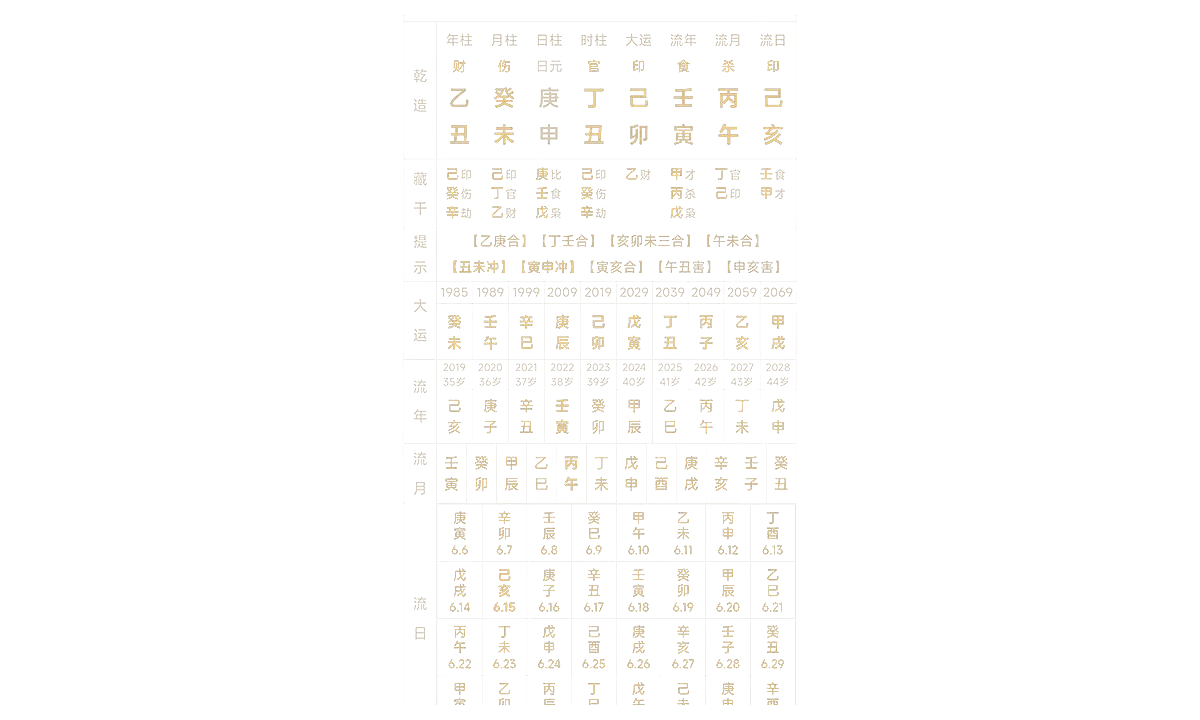
Three layers of time
The natal chart is the base structure, Luck Pillars describe longer phases, and annual influences add shorter conditions. This analogy helps organise time, but none of the layers functions independently.
A decade is not one conclusion
One Luck Pillar does not make every day of ten years the same. Age, family, work and social position keep changing, and transitions around a pillar shift are usually gradual.
How to read a year
Compare the annual stem and branch with both the natal chart and current Luck Pillar. Interactions matter only when they touch relevant positions and real-world conditions; a symbol does not equal an event.
Responsible use of timing
Timing analysis is better used to identify themes, resources and decision rhythms, such as periods for learning, consolidation, expansion or risk reduction, than to promise profit or disaster.
Review and revise
Compare the model with several past years. If themes and timing repeatedly fail to correspond, recheck birth data, cycle calculations and assumptions rather than forcing events to fit.